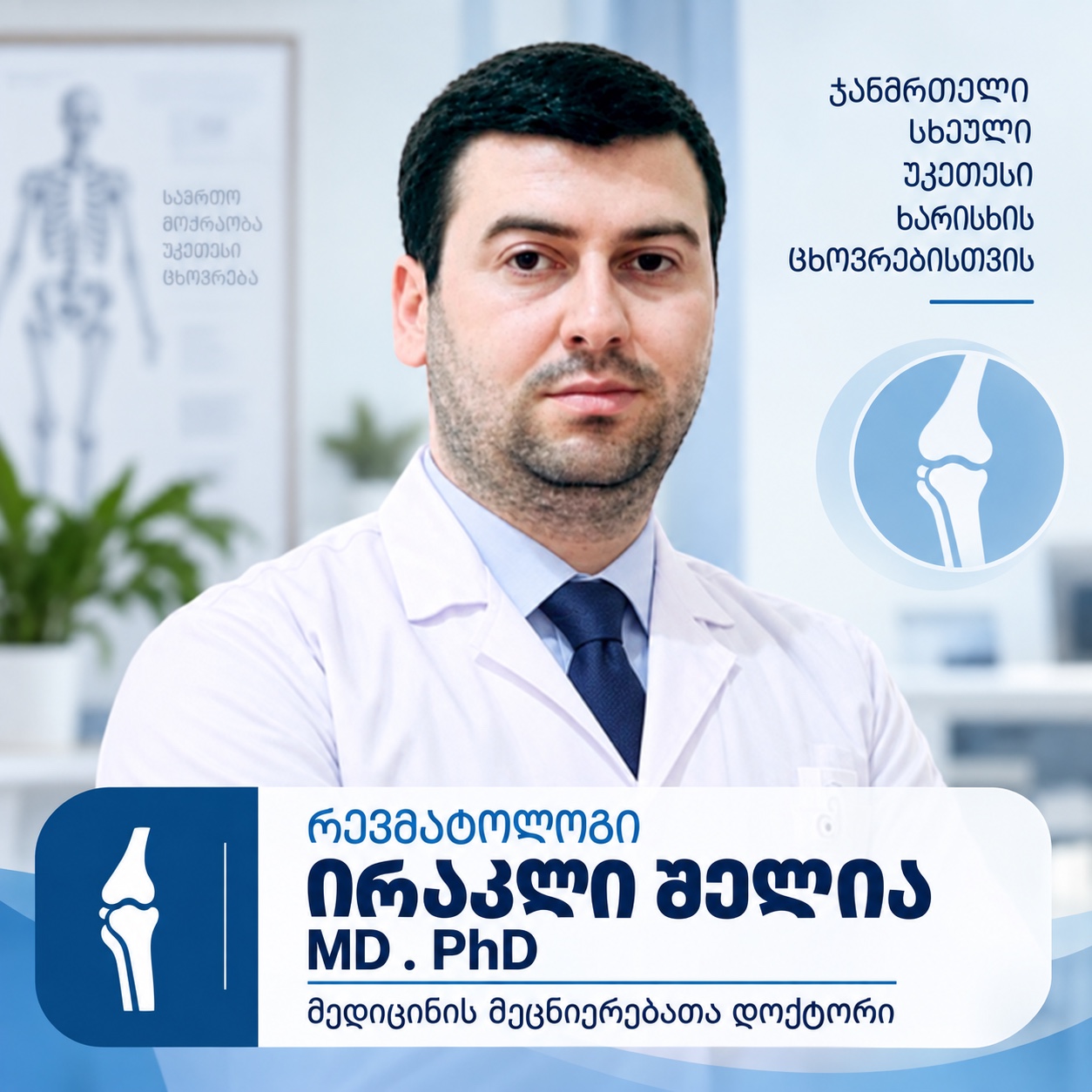
Rheumatologist Seeing Patients with Complex Conditions — Irakli Shelia
Persistent joint pain, recurring inflammation and symptoms that have not improved despite previous treatment may require a careful review of the diagnosis. Irakli Shelia, MD, PhD, sees patients in person in Tbilisi, including those with complex musculoskeletal and rheumatology concerns. Care is individualized to clinical findings and safety.
What makes a rheumatology case complex?
Several affected joints, prolonged inflammation, other chronic conditions, uncertain laboratory findings or poor response to previous treatment can make assessment more complicated. Different conditions sometimes produce similar symptoms.
Previous specialist reports, imaging, medication lists and adverse effects help the clinician understand what has already been tried and why symptoms continue.
Which conditions may need specialist evaluation?
A rheumatologist assesses rheumatoid arthritis, psoriatic arthritis, spondyloarthritis, gout, selected systemic autoimmune diseases and other musculoskeletal complaints. Knee or hip osteoarthritis can also cause considerable pain and functional limitations.
A complicated presentation does not automatically indicate an autoimmune disease. Diagnosis requires the full history, examination and indicated investigations.
What if earlier treatments did not work?
The initial diagnosis, medication choices, adherence, side effects, possible complications and other pain sources may need reassessment. A clinician can review existing blood tests, ultrasound, X-rays or MRI findings before selecting further tests.
Treatment changes or referrals depend on each patient. Neither a cure nor avoiding surgery can be promised in advance.
Joint injections, pain procedures and rehabilitation
Depending on the diagnosis, ultrasound-guided joint injections or other interventional pain procedures may be discussed, taking possible benefits and contraindications into account.
Exercise-based rehabilitation, medication and coordinated care may form part of the plan. Injections are not an appropriate solution for every complex case.
When is urgent medical attention needed?
A suddenly hot, markedly swollen joint accompanied by fever requires urgent assessment to exclude infection. New severe weakness, rapidly progressing numbness or loss of bladder or bowel control also requires immediate evaluation.
Emergency symptoms should not be left until a routine outpatient appointment.
Qualifications and professional memberships
Irakli Shelia, MD, PhD, is described in his professional profile as Doctor of Medical Sciences and Head of the Rheumatology Department. He studied at Tbilisi State Medical University and pursued specialist training at I. M. Sechenov First Moscow State Medical University.
Listed memberships include EULAR Blue Member (2026), ACR International Fellow Member (through October 31, 2027) and ISPRM Active Individual Member (2026). Professional memberships are not rankings or guarantees of clinical outcomes.
Preparing for your appointment
Bring previous laboratory results, imaging, medication lists and a short timeline of past treatment. This can help the specialist assess a difficult clinical presentation.
Gudushauri National Medical Center, 66 Ljubljana Street, Tbilisi, Georgia. Book at least one day in advance: +995 555 78 77 72. In-person consultations only; no online or home visits.
For educational purposes; this article does not replace an individualized medical evaluation.